The Weekly Play

The Wednesday Play: Play For Tomorrow (1982)

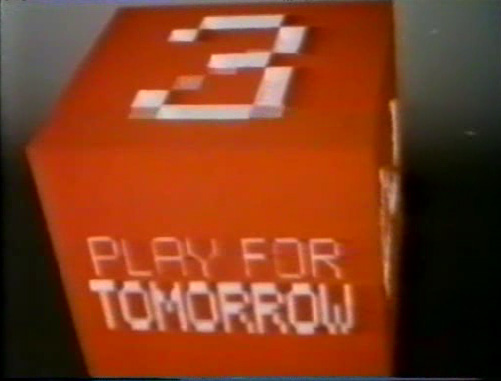
It’s often said that science-fiction never truly predicts the future, only comments on the present – that trying to imagine what the future will bring only ever shows you what the writer thinks about the now. Perhaps never on TV has this been more highlighted than in the 1982 BBC1 series Play For Tomorrow

When The Flipside of Dominick Hide proved a hit for Play For Today, the BBC commissioned a series of six plays all set in what was then the distant future: the end of the 20th century and start of the 21st. However, with the obvious benefits of hindsight, we can see just how wrong they were – and how much what they predicted was predicated on the future being not too different from the present, even when it seemed to be.

After the jump is your chance to visit a 2002 when nuclear war was perilously close, a 1999 when the EU is at war, a 1997 when cricketers practised guerilla warfare, another 1999 when married women couldn’t work, yet another 1999 when everyone had virtual reality shades and finally a 2016 where Kenneth Branagh will still have a Northern Irish accent.

Continue reading “The Wednesday Play: Play For Tomorrow (1982)”

The Weekly Play

The Wednesday Play: Up The Junction (1965)

What would Wednesday be like without a little bit of cheery social realism from Ken Loach, hey? You don’t have to imagine, because today’s play is Up The Junction, a Wednesday Play from 1965. Based on the 1963 Nell Dunn novel of the same name, which in turn was based on conversations the authoress overheard in local pubs, the play depicts then-contemporary life in Battersea, showing everything from petty thieving and sexual encounters, to births and deaths. Unsurprisingly, it was watched by 10m viewers and attracted a record 400 complaints.

More importantly, Loach’s characteristic documentary-style depiction of back-street abortions was powerful enough that the public debate was swayed and abortion was legalised in 1967. Loach commented that the use of documentary elements reflected the programme’s scheduling: The Wednesday Play appeared immediately after the evening news. “We were very anxious for our plays not to be considered dramas but as continuations of the news,” he added.

Less importantly, it led to a movie the same year that starred Dennis Waterman and Maureen Lipman. Can’t be helped, that.

The Weekly Play

The Wednesday Play: The Naked Civil Servant (1975)

Given that the Queen has just today signed an act of parliament making gay marriages legal in England and Wales, it seems appropriate to make today’s Wednesday Play The Naked Civil Servant, a boundary-breaking ITV play based on the autobiography of openly gay man Quentin Crisp. Directed by Jack Gold, written by Philip Mackie and produced by Blog Goddess Verity Lambert, the play starred John Hurt as the flamboyant Crisp, covering his life from youth to middle age as he comes to terms with his homosexuality during the 1930s and 1940s, a time when homosexuality was illegal and even women were looked down upon for dyeing their hair.

Spawning a recent sequel (An Englishman in New York) and regarded by industry professionals as one of the most important British TV plays ever made, it’s a must watch. If you like it, buy it on DVD!

The Weekly Play

The Wednesday Play: Blue Remembered Hills (1979)

Blue Remembered Hills

Anyone who’s ever watched US TV that features teenagers and young people will have noted that fairly frequently, adult actors have been cast in roles that they’re clearly too old for. Think of Buffy The Vampire Slayer: set in a High School for its first three seasons, it featured Charisma Carpenter as one of its pupils – at the time of the first season, Carpenter was 27 years old, despite playing a 16-year-old. Smallville – which got the subtitle of Superman: The Early Years over here – featured Tom Welling as the 16-year-old Clark Kent, when at the time he was 24. Add to that list shows like Gossip Girl, Modern Family and Pretty Little Liars, and you can see a pretty concerted strategy to not employ young people to play young people.

The general aim, of course, has been to get people with acting talent and the emotional maturity required for roles, as well as to make them allowably fanciable (in certain cases). Plus there’s those tricky child labour laws, education and so on to deal with.

But famed playwright Dennis Potter (The Singing Detective, Brimstone and Treacle) went to a different extreme, using the technique in an entirely different way in a number of plays for entirely different reasons. Both Stand Up Nigel Barton and his final work, Cold Lazarus, saw Potter casting very much grown adults in the roles of children to emphasise aspects of childishness in adults, to highlight the differences, and to achieve emotional resonances and performances that might not be achieved with child actors.

Perhaps his best use of the device was in Blue Remembered Hills, a Play For Today that aired in 1979. The play gets its name from poem XL of AE Housman’s A Shropshire Lad, ‘The Land of Lost Content’, which is read by Potter himself during the play:

Into my heart an air that kills
From yon far country blows:
What are those blue remembered hills,
What spires, what farms are those?

That is the land of lost content,
I see it shining plain,
The happy highways where I went
And cannot come again.

It stars Michael Elphick (Boon, Private Schulz), Robin Ellis (Poldark), Helen Mirren (do I have to remind you? Prime Suspect, at the very least), Colin Welland (Z-Cars), Janine Duvitski (Diane), Colin Jeavons (Inspector Lestrade in The Adventures of Sherlock Holmes) and John Bird (Bremner, Bird and Fortune) as the seven-year-olds in question. Probably the closest point of comparison is Lord of the Flies, with a group of normal children playing in the Forest of Dean one summer afternoon in 1943 but victimisation, stereotyping and brutality setting in over time, with tragic results.

Since airing on TV, the screenplay has been adapted for the theatre and is now a standard text at GCSE Drama. Enjoy, and remember if you like it, buy it on DVD to support those nice people who made it in the first place.

The Weekly Play

The Wednesday Play: General Electric Theater – Clown (1955)

GE Theater with Ronald Reagan

Most of the plays featured in this strand have been British. But as I’ve remarked before, the US had plenty of its own play strands, artfully disguised as “anthology shows”. One of the longer lasting anthology shows – and eventually most controversial – was General Electric Theater. Guess who the sponsor was.

An offshoot, as many of these strands were, of a radio show, it was broadcast every Sunday evening at 9pm, starting on February 1 1953 and running for an amazing nine years until May 27 1962 for a total of 209 episodes, all of which were adapted from novels, short stories, plays, films and magazine fiction. Originally host-less, on September 26 1954, the show took on no less an actor than Ronald Reagan to introduce and even star in some of the segments.

Given Reagan part-owned the show, it made him a wealthy man; however, when he spoke out in 1962 against the problems of ‘big government’, it didn’t stop GE from firing him, possibly under pressure from Robert Kennedy, leading to the show’s cancellation.

Along the way, though, General Electric Theater accrued a remarkable number of performances from stars of the day, including Kevin McCarthy, Lee Marvin (no fewer than seven times), Lon Chaney Jr, Dean Stockwell, George Snaders, Alan Ladd, Vincent Price, Zsa Zsa Gabor, Judy Garland and even Nancy Reagan herself.

This week’s play, though, is Clown, which stars Henry Fonda in an adaptation of the autobiography of circus performer Emmett Kelley. Enjoy!