Classic TV

Nostalgia Corner: Schalcken the Painter (1979)

Making art history programming interesting, accessible and memorable is a tricky thing. Doing two of those isn’t necessarily hard, but all three is tricky. 

For example, I watched all of Simon Schama’s Power of Art, but while I found it very interesting and accessible, I can’t tell you much about what our Simon said except that Caravaggio was very realistic and good with lighting. For me, it failed in actually educating me about art.

Dramatisation, which was one of Simon’s tactics, can certainly help with making art history interesting and accessible, but there are few arts programmes that have gone as far as Omnibus did in using dramatisation to make it memorable, too. In 1979, the BBC arts programme included an hour-long drama about 17th-century Dutch painter Godfried Schalcken. What was even more novel about it and helped it to be memorable was that rather being a simple biopic, it was also a ghost story.

In common with Jonathan Miller’s original adaptation for Omnibus of Whistle and I’ll Come To You, Schalcken The Painter is not officially part of the BBC’s long-running series A Ghost Story for Christmas. Yet not only did the episode air in the series’ traditional slot of 23 December, vacated when the series was cancelled in 1978, it also fit in tonally, while still being an arts programme dedicated to exploring Schalcken’s life and art.

Based on Sheridan Le Fanu’s short story Strange Event in the Life of Schalken The Painter (sic) and narrated by Charles Gray as’Lefanu’, the episode follows Schalcken (Jeremy Clyde)’s career from his early days as a pupil of Gerard Dou (Maurice Denham), one of Rembrandt’s most famous pupils. 

There he falls in love with Dou’s niece Rose (Cheryl Kennedy), but before they can be betrothed, a pale man called Vanderhausen (John Justin) comes to the door, offering a huge sum of money in exchange for her hand in marriage. Rose begs Schalcken to take her away before the marriage goes ahead. Does he? Well, you’ll have to watch to find out.

Schalcken's ghost

Schalcken the Painter was directed by Leslie Megahey, the producer in charge of Omnibus, who had actually only accepted the job on condition that she could adapt Le Fanu’s short story for the programme. Inspired by Walerian Borowczyk’s Blanche, she shot the film in the style of a docudrama, using the absolute bare minimum of dialogue.

To meet the Omnibus remit, many scenes depict Schalcken recruiting models and posing them for his most powerful works, with Gray exploring the merits of each composition and how it might have derived from Schalcken’s life and mental state.

The most important of these, ironically, is a fake – an adaptation by the production team of ‘Young Girl With A Candle’ in the style of Schalcken that starts and finishes the episode and purports to be the inspiration for Gray’s narration.

Girl with a candle

(Fake) Schalcken picture

But Schalcken is not the only artist to feature. As well as Dou, Rembrandt (Charles Stewart) himself turns up to commission Schalcken. And the production team used the paintings of Vermeer, de Hooch and Dou to learn what interiors of 17th century Dutch domestic dwellings were like, as well to compose scenes.

Schalcken Interior

For the more frightening qualities of the story, they also took inspiration from both Schalcken’s and Rembrandt’s work and their mastery of darkness.

Darkness in Schalcken

Girl posing in 'Shalcken The Painter'

As a piece of art history, the fictional nature of the story obviously means Schalcken The Painter is flawed, particularly since its most enduring image isn’t actually by Schalcken. But it’s now probably more famous than Schalcken himself and certainly more people will have heard of him because of it than would otherwise have done. Certainly, I did.

Here’s the first few minutes, but if you like it, as always, buy it (iTunes if you prefer)!

What TV’s on at the BFI in December 2016? Including The Avengers’ Tunnel of Fear and The Witness for the Prosecution

Even later this month than usual, it’s TMINE’s coverage of all the BFI events coming your way in December. There’s three big highlights to round off 2016. The first is a preview of BBC One’s latest Agatha Christie adaptation, The Witness For The ProsecutionThe second is this year’s Missing Believed Wiped, which among other things will feature the newly returned Avengers episode Tunnel of Fear

But the bulk of the month will be dedicated to the continuation of the Blackstar season, which will have everything from a showing of Wednesday Play Fable through a Desmond’s reunion to a panel discussion with Carmen Munroe, Don Warrington, Zawe Ashton, Ashley Walters, Isaac Julien and Pat Younge – sounds top!

Continue reading “What TV’s on at the BFI in December 2016? Including The Avengers’ Tunnel of Fear and The Witness for the Prosecution”

What TV’s on at the BFI in October/November 2016? Including NW and A Black History of Britain

Stonkingly late as usual, it’s TMINE’s usual coverage of all the BFI events coming your way in the unusual BFI-created month of October/November (not to be confused with September/October). This month, most of the TV output comes as part of the BFI’s BlackStar season, looking at the contributions by black talent to movies and television around the world as well as in the UK. It includes a preview of the forthcoming NW, Black is the New Black and A Black History of Britain, a tribute afternoon to Cy Grant, a 10th anniversary screening of Shoot The Messenger, as well as numerous plays.

But also lined up is a preview of Television’s Opening Night: How the Box was Born, a recreation of the first ever night of BBC TV, as well as another recreation – an animated version of missing Doctor Who story The Power of the Daleks.

Continue reading “What TV’s on at the BFI in October/November 2016? Including NW and A Black History of Britain”

Signing’s come a long way on UK TV

For those who are nostalgic for TV times past (like me), it’s sometimes easy to forget that the past wasn’t necessarily better – particularly for minority groups. Consider the deaf (assuming you’re not. Deaf that is). Time was that BSL signing on television was unheard of. It just didn’t happen. 

The first exposure to it I remember getting was when one of my favourite early 80s bands, Red Box, appeared on Blue Peter to discuss the inclusion of a BSL signer in the video for their song ‘Lean On Me’. 

Of course, when ‘For America’, their next song came out, no BSL signing was deemed necessary. Gimmick, maybe?

And apart from a new little show on Sunday afternoons called See Hear, that was about it for BSL for quite some time.

Nowadays, although we’re still not exactly talking global signing, the BBC has both signed versions of regular programming in its Sign Zone slot and original programming, too, including the now venerable See Hear.

You don’t have to stay up late set the video to watch signed programmes, since you can watch them on iPlayer, too. There’s even live signing on BBC News.

Like the BBC, Channel 4 has its own late night signing, as do E4 and Film4, and of course the recent Rio Paralympics was signed.

Other channels? Not so much.

Commercials are an interesting one. This recent one for Maltesers is something of a first. 

Lovely, hey? But perhaps even lovelier is the signed version (yes, really), since it showed that enough people would recognise the BSL signer from the Rio Paralympics that he could be included in the ad. Not that he had a lot to do…

Classic TV

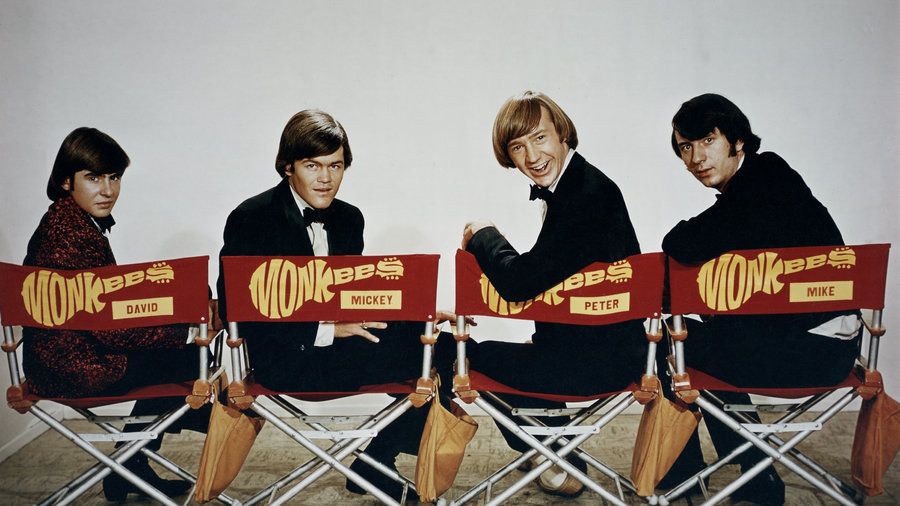
Nostalgia Corner: The Monkees (1966-1968)


Celebrating its 50th anniversary this month, The Monkees was one of those shows you couldn’t avoid if you lived in the UK during the 80s. Every time school holidays rolled around, along with The Red Hand Gang and The Flashing Blade, there was The Monkees on BBC1, every morning. This was despite having been made in the 1960s, mind you – I do wonder how the kids of today will ever get to watch classic TV without the likes of the Beeb and Channel 4 to force feed them it any more.

The Monkees was odd. One of the first US shows to feature teenagers as its leads, it starred an eponymous pop group of four youngsters, Davy Jones, Mike Nesmith, Micky Dolenz and Peter Tork, all with Beatles-esque haircuts – guess what network NBC was trying to cash in on? What was odd was:

  1. It was a sitcom, set around the group’s often surreal, often fourth-wall breaking adventures, in which they all played versions of themselves
  2. Davy Jones was British, which was a rare thing on US TV in those days
  3. It had musical breaks during which the band sung their songs, although frequently the action would continue while the group played
  4. The group had never met each other until the show, having been recruited by an NBC casting call, yet they still managed not only to gel, but to become a successful band in their own right.

In fact, so well did they gel, despite the tragic loss of Davy Jones, the remaining Monkees are still touring and writing music to this day, and the group created a number of classic 60s songs, including ‘I’m A Believer’, ‘Last Train To Clarksville’ and ‘Daydream Believer’. Not to forget the theme tune to the show itself.

The show lasted for an impressive two seasons, after which the group’s metaness reached a peak with the movie Head, written by the show’s creator Bob Rafelson (Five Easy Pieces) and none other than Jack Nicholson. This was actually an odd, stream of conscious, series of scenes about the difficulties of being a public figure, interspersed with satire about war, drugs, and politics. That and getting stuck in a giant Victor Mature.

One of the classics of 60s sitcoms, The Monkees’ legacy endured for years. In the 70s, The Banana Splits was largely The Monkees but featuring men wearing animal costumes, with just a hint of Rowan and Martin’s Laugh In. And arguably the 1980s’ The Young Ones‘ musical interludes owed a heavy debt to The Monkees‘. 

You can watch most of the episodes of The Monkees on YouTube, but here’s the first, just for your enjoyment.

And for true fans, here are the screen tests for the cast: