The Weekly Play

The Wednesday Play: Play For Tomorrow (1982)

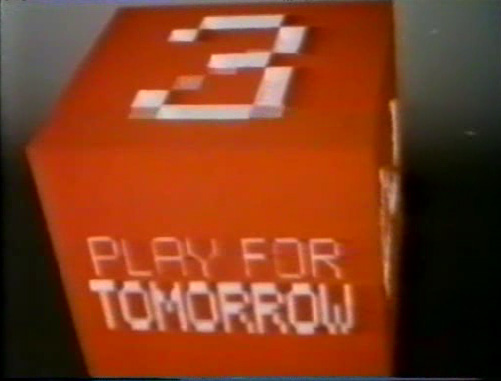
It’s often said that science-fiction never truly predicts the future, only comments on the present – that trying to imagine what the future will bring only ever shows you what the writer thinks about the now. Perhaps never on TV has this been more highlighted than in the 1982 BBC1 series Play For Tomorrow

When The Flipside of Dominick Hide proved a hit for Play For Today, the BBC commissioned a series of six plays all set in what was then the distant future: the end of the 20th century and start of the 21st. However, with the obvious benefits of hindsight, we can see just how wrong they were – and how much what they predicted was predicated on the future being not too different from the present, even when it seemed to be.

After the jump is your chance to visit a 2002 when nuclear war was perilously close, a 1999 when the EU is at war, a 1997 when cricketers practised guerilla warfare, another 1999 when married women couldn’t work, yet another 1999 when everyone had virtual reality shades and finally a 2016 where Kenneth Branagh will still have a Northern Irish accent.

Continue reading “The Wednesday Play: Play For Tomorrow (1982)”

The Weekly Play

The Wednesday Play: Up The Junction (1965)

What would Wednesday be like without a little bit of cheery social realism from Ken Loach, hey? You don’t have to imagine, because today’s play is Up The Junction, a Wednesday Play from 1965. Based on the 1963 Nell Dunn novel of the same name, which in turn was based on conversations the authoress overheard in local pubs, the play depicts then-contemporary life in Battersea, showing everything from petty thieving and sexual encounters, to births and deaths. Unsurprisingly, it was watched by 10m viewers and attracted a record 400 complaints.

More importantly, Loach’s characteristic documentary-style depiction of back-street abortions was powerful enough that the public debate was swayed and abortion was legalised in 1967. Loach commented that the use of documentary elements reflected the programme’s scheduling: The Wednesday Play appeared immediately after the evening news. “We were very anxious for our plays not to be considered dramas but as continuations of the news,” he added.

Less importantly, it led to a movie the same year that starred Dennis Waterman and Maureen Lipman. Can’t be helped, that.

Charley says: here’s the best way to end it all

Most public information films from the 1970s were designed to scare you to death in order to prevent you from doing something the government thought silly. However, this week’s ‘Charley says’ focuses on a relatively unique public information film – one that recommended the best way to kill yourself.

Let the lovely Michael Palin talk you through the worst ways of ending it all, before revealing the one that’s largely guaranteed to work – it probably won’t be the one you were thinking of.