Classic shows that have almost been forgotten, as well as shows that should probably have been forgotten
Charley says: scare people off heroin with a monkey
A slightly scary effort from the US, but really not up to the UK’s best, I don’t think.
Classic shows that have almost been forgotten, as well as shows that should probably have been forgotten
A slightly scary effort from the US, but really not up to the UK’s best, I don’t think.

Okay, technically this is more a movie than a play, but given it’s an adaptation by Nigel Kneale, I’m going to let it off.
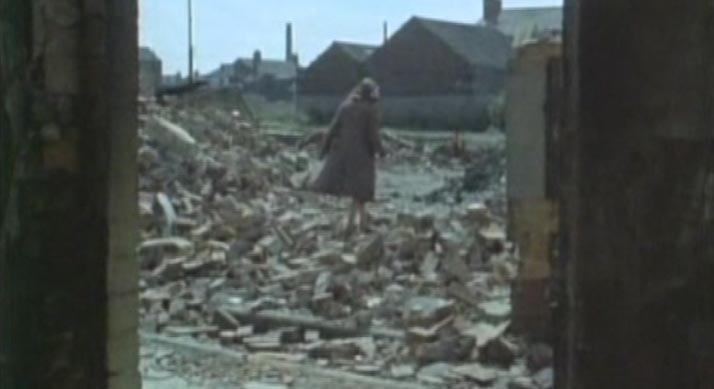
A 1983 horror novella written in gothic style by Susan Hill, The Woman in Black concerns a mysterious ghost that haunts an English seaside town, heralding the death of children. Largely an investigation by solicitor Arthur Kipps, it follows his attempts to discover who the mysterious woman he sees around town is. Let’s just say he’s not pleased by the discovery.
Adapted more recently by Hammer Horror with Daniel Radcliffe in the starring role and more famously as a play in the West End, where it’s the longest running show after The Mousetrap, it was adapted for television by Nigel Kneale back in 1989. Despite featuring Adrian Rawlins as an ‘Arthur Kidd’ (sic), it was a considerably more faithful adaptation than the movie or the play. And you can watch it below, preferably in the dark.
Enjoy!
Any feminist analysis of literature, particularly visual media such as TV, will usually end up invoking ‘the male gaze’ – that is, whether female characters are viewed through the prism of (heterosexual) male desires, concepts about women, etc, or whether there is a greater personal truth to them.
Of course, if you’re targeting an ad at heterosexual men that’s largely about their desires, the male gaze is something that’s going to crop up. Back in the 80s, when HIV/AIDS was a very worrying new disease, persuading men to use condoms for pretty much the first time in a generation was something that required a large-scale government health campaign – even if there was a chance they’d get AIDS and die if they didn’t.
So behold, the male gaze writ large. She’s hot (look!), she’s up for it (look!), but oh the horror if she asks you to stay the night!
Nowadays, with such a rich past to look back on, most people assume you had to be a famous playwright to get a play produced by the BBC’s Play For Today strand. However, John Challen proved that a first attempt by an unknown writer could still make it to the screen. A teacher at an education college in Lincoln, Challen wrote Headmaster, addressed it to BBC Plays Department, and carried on teaching. Director Anthony Page read it, liked it, and asked to direct it.
That “modest achievement”, a result of what Challen called “the hurly burly” of teaching for over 20 years, sees Frank Windsor play the titular head of a school with an increasingly tenuous grip on his position. Intriguingly, given that that it was made 40 years ago, Headnaster shows how little has changed in teaching, given its focus on the conflict between old and modern teaching methods, as well as the eternal jockeying for position amongst teaching staff.
The play was popular enough to merit a six-part series in 1977, written by Challen and with Windsor and other cast members retained. You can watch it below. Enjoy!

Hull’s not everyone’s cup of tea. The northern city, best known for fishing, has consistently been voted one of the worst places in Britain. Indeed, it was voted number 1 in the original ‘crap towns‘ survey.
Not everyone thinks that, though (indeed, it’s going to be 2017’s City of Culture). Rather fabulous UK playwright Alan Plater (The Beiderbecke Affair et al) wrote a typically wry and semi-loving look at Hull in the 1973 Play for Today Land of Green Ginger. Named after a street in Hull, the play sees its heroine Sally Brown (Gwen Taylor) having to deal with the prospect of being sent abroad to work. So she returns home from London to Hull to see if she still feels the same attachment for her home town – and for her old boyfriend. Will she decide to take the job abroad or return to live with Mike in Hull?
The play shows us Hull through Sally’s eyes, giving us the good and the bad, just as she sees both the good and the bad in the city. It also gives us folk music from The Watersons. Whether that’s your cup of tea might well determine what you think of the play. Enjoy!
© 2022 The Medium is Not Enough