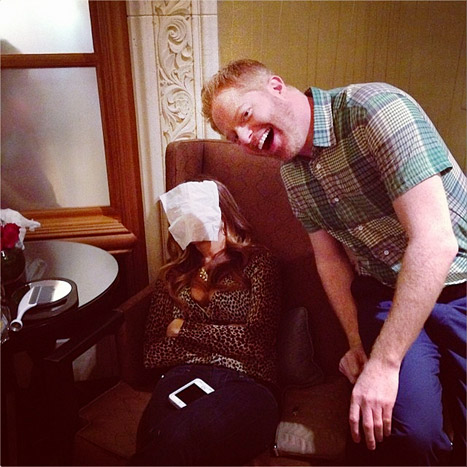
Or they’ll do this to you.

US TV
<BANE VOICE>Mmmmgh Mmmmgh Steve Coogan Mmmmgh Rob Brydon MmmmghMmmmghMmmmgh Mmmmgh MmmmghMmmmghMmmmgh Michael Caine Mmmmgh Mmmmgh Mmmmgh The Dark Knight Rises Mmmmgh MmmmghMmmmgh MmmmghMmmmghMmmmgh Tom Hardy Mmmmgh Mmmmgh Mmmmgh Christian Bale in The Trip To Italy</BANE VOICE>. No word yet when it’s coming to either UK or US TV
[via]
Film
Film casting
Trailers
Canadian TV
New UK TV show casting
US TV
US TV show casting
New US TV shows
New US TV show casting
I’m running a bit low on nostalgia. Okay, I’m not really – there’s still plenty of shows piled up in the ‘Nostalgia Corner’ queue. However, the time needed to do them justice versus the time I actually have available most of the time aren’t always the same thing.
So in a somewhat radical move, for the first time since I opened the blog in 2006, I’m asking you gentle reader if you’d like to contribute your memories of a TV show from your youth to Nostalgia Corner. They can have aired anywhere in the world and you can write as much or as little as you want. The only criteria I have are:
Do I have any volunteers?

Sometimes, plays can be used to illustrate a societal or political problem, through allegory or even fable. Sometimes, though, they can be too subtle for their own.
Fable, John Hopkins’ 1965 The Wednesday Play, was actually a rather daring piece – a commentary on race relations in the UK and South Africa that inverts the two countries’ societies to imagine a British racial apartheid, but one in which whites are the brutally oppressed, blacks the authoritarians running the system. Narrated by Keith Barron, the play contrasts the experiences of an oppressed white couple, Joan (Eileen Atkins) and Len (Ronald Lacey), with the middle-class, black, liberal writer Mark (Thomas Baptiste) living under house arrest with his wife Francesca (Barbara Assoon). As well as showing by analogy just how poorly black people were then treated by white people, it also castigated the efforts of white liberals in South Africa to challenge the regime, arguing that they showed little interest in doing anything except being self-righteous.
The play, which was also interspersed with stills and documentary footage of conflicts in South Africa, Vietnam and elsewhere, was powerful enough that its broadcast was initially postponed by several weeks because of fears that it would raise racial tensions in a forthcoming by-election in Leyton, East London, that involved a candidate who had previously lost his seat following a notoriously racist campaign in Birmingham.
Disappointingly, however, the audience at the time didn’t quite understand Hopkins’ message. “I got a letter from a viewer which said ‘I really enjoyed that play. Boy, you showed them what would happen if they came to power, if they had the authority.’ He didn’t even need to specify who ‘they’ were.”
You can watch the play below, although unfortunately, this copy is from BBC4’s 2005 ‘TV on trial’ season, so involves a certain amount of on-screen ‘grafitti’.
© 2022 The Medium is Not Enough