Subtitles are a necessary evil if you
- Plan to watch TV programmes from overseas
- Don’t plan on becoming entirely fluent with every language in the world
Nevertheless, there are problems with them. You lose a lot in the translation when phrases and words don’t have matching concepts in your own language. Then there are prissy subtitlers who don’t like swearwords or perhaps aren’t as fluent as they should be in your native language, resulting in errors. Subtitles also have to fit on-screen and progress at the same speed as the dialogue, so generally abbrievate the dialogue anyway.
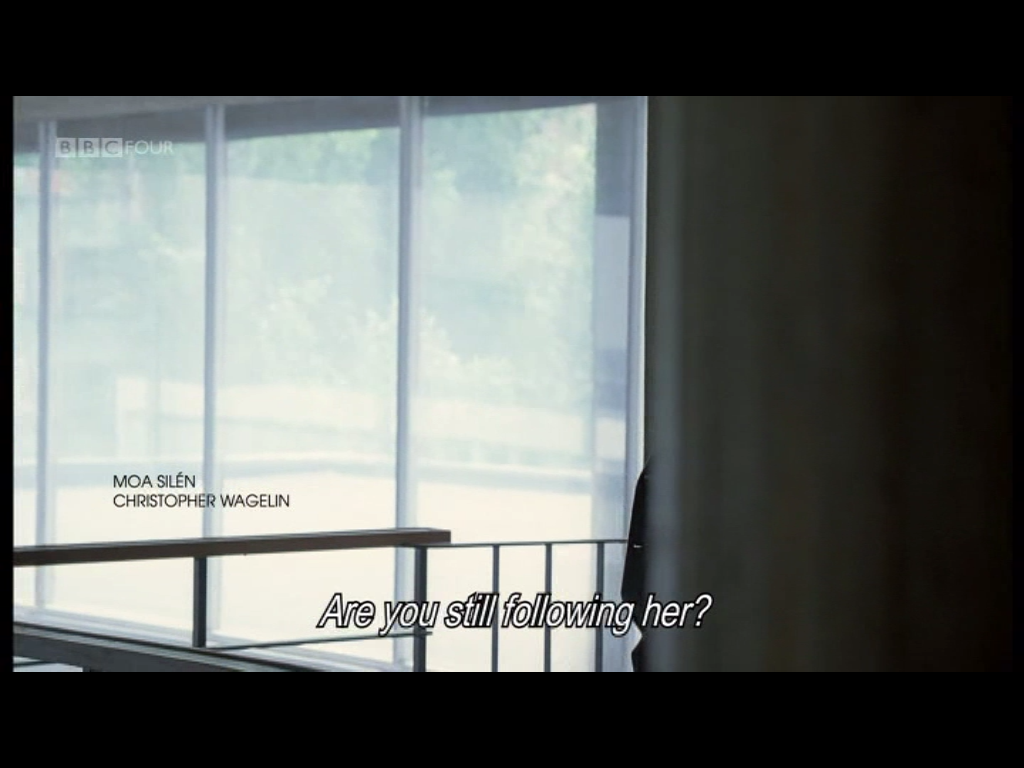
A little considered aspect of them is their typography and positioning. Consider Sebastian Bergman‘s subtitles:
Nothing inherently wrong with the subtitle typeface, and you’ll notice there’s both a keyline and a dropshadow on the text so that it’ll show up well against the mixed black-white background. I tried to watch Kurosawa’s Ran which had purely white text against a bright background so was unreadable.
But have a look at the credits in the mid-left of the screen. They’re in a sort of bold Futura, all in upper case, designed to look sophisticated, discreet and intelligent – as is the show. Except the much bigger, italic Helvetica-esque text at the bottom of the screen now swamps that effect completely. The subtitles convey a rather more ordinary tone to the show, something more generic. Imagine what the screen would look like without them, to see what I mean.
As a result, the viewer can subsconsciously be led into thinking the show is something different from what the creators intended. There’s not a lot that can be done about it, although a lot of Blu-Ray releases now have custom typefaces for subtitles designed to match the feel of the show as much as possible, but it’s something to bear in mind when watching a foregin show.
Ain’t typography fun?