It’s “What have you been watching?”, your chance to recommend to fellow TMINE readers anything you’ve been watching this week
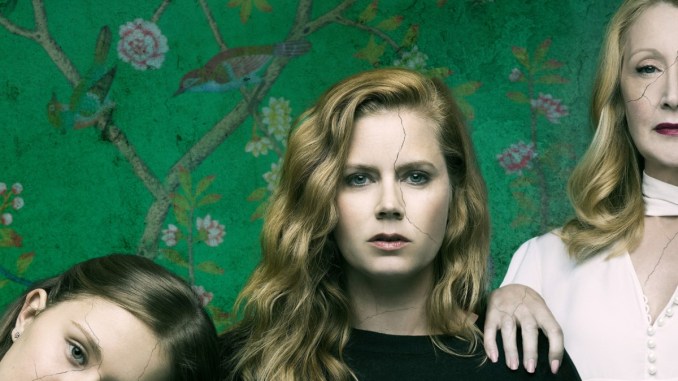
July 4th continued to wipe out viewing last week, so not a lot of new shows for me to look at. As promised, I did manage to review the second season of Netflix’s GLOW and after the jump, I’ll be looking at HBO’s new limited series, Sharp Objects.
I’ll be reviewing The Outpost (US: The CW; UK: Syfy) in the next few days and I’ve made a start on Netflix’s first Indian original, Sacred Games, which is like an odd religious combination of The Game, GoodFellas and Narcos, but as I’m only a few episodes in, I’ll leave commenting on it until next week when hopefully I’ll have watched the whole thing.
I even had a little time to watch some fourth season iZombie on Netflix out of the corner of my eye as Lovely Wife binged it. It’s basically still the same, isn’t it, bar there being a lot more zombies than there were in season one? Still, it was fun to see the now traditional “lead foreign actor gets to use his/her real accent” episode of the show (cf Chuck, Bionic Woman, House), in which Rose McIver got to speak in Kiwi.
Given there was no Condor last week (July 4th, yadda, yadda), that means the only regulars I’ll have to talk about after the jump are Marvel’s Cloak and Dagger and Shooter. Gosh. Maybe I should take up reading books instead. Or is that too radical? The most I’ve managed recently is Winnie the Pooh…
As a rule, TMINE doesn’t normally cover events at the Barbican because they’re almost never TV-related. However, in September, they’ve organised themselves a little TV event, so I thought I’d give you some details.
The Television Will Be Revolutionised: Channel 4 and the 1982 Workshop Declaration
A season of oppositional documentaries from Channel 4’s first decade: a radical, game-changing era that opened doors for diverse voices in cinemas and on British television.
Channel 4 began life in 1981 with a remit to provide innovative broadcasting, and to challenge the mainstream BBC/ITV duopoly. Under the 1982 Workshop Declaration, the Channel agreed to fund and screen films from the ‘alternative’ film and video collectives – known as workshops.
Working closely with trade unions, Labour local authorities, political groups, women’s organisations and ethnic minority communities, by 1988, some 44 workshops had had films funded and screened by Channel 4.
So began a decade of experiment with politically progressive and aesthetically avant-garde documentaries and dramas screened on British television, which continued until 1990. The gateways had been opened to film-makers from diverse and regional backgrounds, and new voices found greater opportunities to share their stories.
Programme and booking details after the jump and these clips…